Optimized steel-ceramic-rubber composite formulations designed to withstand high impact, dry abrasion, and extreme desert heat in Southern Africa.
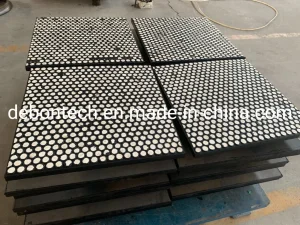
Heavy-duty alumina ceramic matrices vulcanized to impact-absorbing rubber and steel backing plates. Ideal for Erongo's uranium chutes.
Inquire Now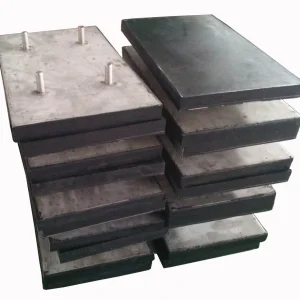
Durable rubber elastomeric impact plates designed to reduce structural vibration and protect infrastructure from heavy rock drops.
Inquire Now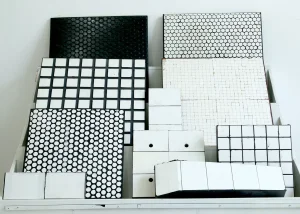
Direct-from-manufacturer high-density alumina ceramic-rubber composite plate, offering wear life up to 10x longer than steel.
Inquire Now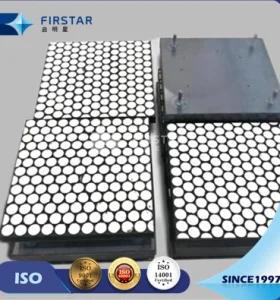
Customized hexagonal/square ceramic tile layouts optimized for dampening drop energy in primary and secondary screening plants.
Inquire NowNamibia stands as one of Africa's premier mining powerhouses, famous for its colossal open-pit uranium deposits, ultra-high-grade diamonds, and deep copper and gold reserves. However, this mineral wealth is locked in some of the most unforgiving environments on Earth.
In locations like the Erongo Region—home to world-class uranium mines such as Husab and Rössing—and the Otjikoto gold mine, equipment is constantly exposed to coarse, dry, abrasive granite, alaskite, and quartzite. Conveyor transfer points, screen chutes, and hoppers bear the brunt of thousands of tons of high-velocity materials daily.
Traditional steel liners (such as manganese steel or AR400/500 plates) fail rapidly under these conditions. The combination of dry friction, windblown desert dust, and sharp-edged mineral feed results in rapid micro-ploughing and surface fracturing, leading to frequent unplanned shutdowns, high maintenance costs, and lost productivity. Local mine operators require advanced composite technologies to combat this multi-faceted wear mechanism.
Our Steel-Ceramic Composite Liners are engineered as a three-in-one system. This configuration leverages the individual properties of three highly distinct materials to combat compound wear:
92% or 95% Alumina (Al₂O₃) and ZTA (Zirconia Toughened Alumina) tiles offer supreme hardness (Mohs scale 9), ensuring unmatched resistance to sliding abrasion from dry, fine dust and coarse minerals.
A specialized vulcanized rubber formulation acts as a shock absorber. It cushions high-angle impact energy, preventing the brittle ceramic tiles from cracking under bulk material drops.
Provides structural support and enables reliable mechanical attachment. Stud welding, countersunk bolting, or direct welding systems allow for secure mounting onto chute walls.
Designed for heavy mineral processing plants. Select the appropriate formulation based on your material size and drops.
| Parameter | 92% Alumina Composite | 95% Alumina Composite | ZTA (Zirconia Toughened Alumina) |
|---|---|---|---|
| Al₂O₃ / ZrO₂ Purity | ≥ 92% Al₂O₃ | ≥ 95% Al₂O₃ | ~74% Al₂O₃ + 21% ZrO₂ |
| Bulk Density | ≥ 3.60 g/cm³ | ≥ 3.65 g/cm³ | ≥ 4.10 g/cm³ |
| Mohs Hardness | 9 | 9 | 9+ |
| Rubber Elongation at Break | ≥ 400% | ≥ 450% | ≥ 450% |
| Rubber Tensile Strength | ≥ 15 MPa | ≥ 16 MPa | ≥ 18 MPa |
| Adhesion Strength (Rubber to Steel) | ≥ 8.0 MPa / 10mm | ≥ 8.0 MPa / 10mm | ≥ 9.0 MPa / 10mm |
| Max. Drop Height / Particle Size | Moderate (< 1.5m / < 50mm) | Moderate-High (< 2.5m / < 100mm) | Heavy Duty (< 5.0m / < 200mm) |
Every mining operation has a unique wear profile. Here is how we customize our steel-ceramic liners to meet specific local needs.
Uranium processing involves aggressive crushing, screening, and acid leaching. Due to the high abrasiveness of alaskite granite ore, transfer chutes experience intense wear. Our thick ZTA ceramic composite liners, vulcanized with acid-resistant synthetic rubber matrices, protect the chutes from early structural failures and prevent chemical deterioration.
In the extremely humid marine environments of Lüderitz and Oranjemund, metal corrosion accelerates abrasion. The combination of salt-laden air, wet slurry, and hard coastal aggregate degrades standard steel. Our composite ceramic liners with 316-grade stainless steel backing plates offer combined corrosion and wear resistance.
At the Tschudi copper project and Otjikoto gold processing plants, raw ore runs through feeders, cyclone inlets, and high-impact deflectors. Utilizing spherical alumina ceramic inserts embedded in heavy-duty rubber allows for smooth flow, preventing material blockages while dampening high-frequency impact vibrations.
Explore our technical portfolio of wear plates, custom liners, and rubber-ceramic matrices designed for heavy-duty material handling.
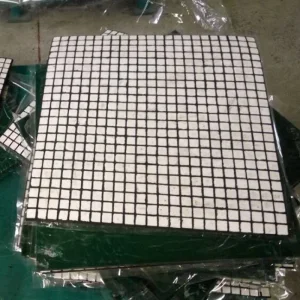
Features thick ceramic bricks built for primary crushing chutes and high-velocity rock impact zones.
Inquire Now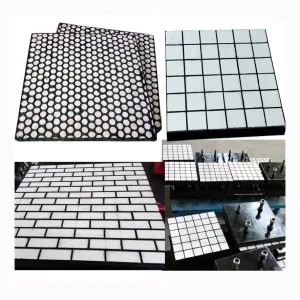
Engineered with a vulcanized rubber layer to absorb impact, preventing ceramic fracture during run-of-mine handling.
Inquire Now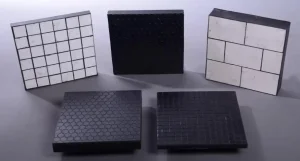
Customizable liner sheets that can be cut and shaped to fit complex curved chutes and feed hoppers.
Inquire Now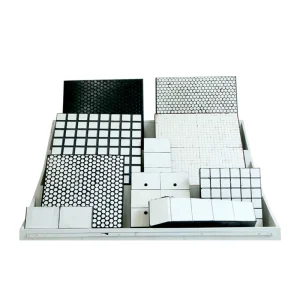
Zirconia Toughened Alumina (ZTA) composite offering outstanding toughness for high tonnage throughput.
Inquire Now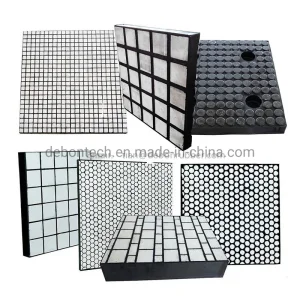
Proprietary manufacturing technology ensures high adhesion between steel, rubber, and ceramics.
Inquire Now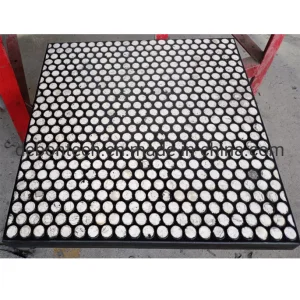
Designed for high-speed ship loading terminals handling abrasive mineral concentrates.
Inquire Now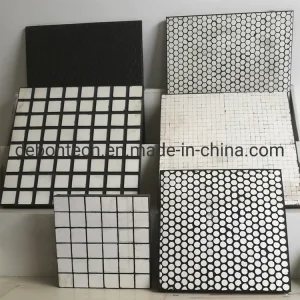
Equipped with high-performance adhesive layers to facilitate direct on-site bonding without welding.
Inquire Now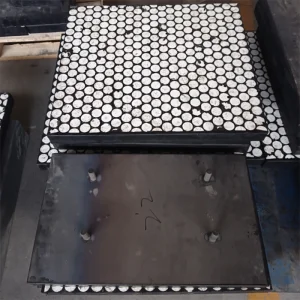
Optimal mixture of alumina hardness and zirconia resilience for extreme duty applications.
Inquire Now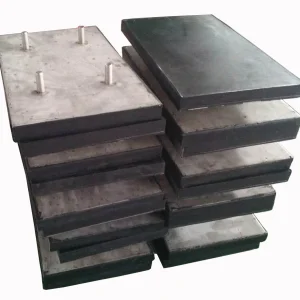
Rigid steel backed rubber mat panels designed to absorb and deflect high drop impact in aggregate processing.
Inquire Now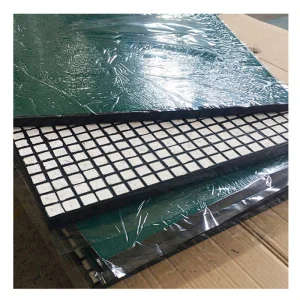
Provides structural longevity for limestone and clinker handling hoppers experiencing slide wear.
Inquire Now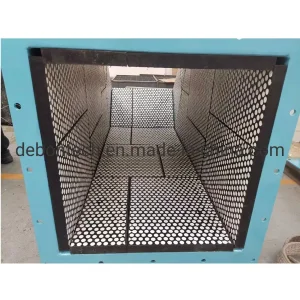
Highly flexible, impact-absorbing plate that extends lifetime of secondary sorting mills.
Inquire Now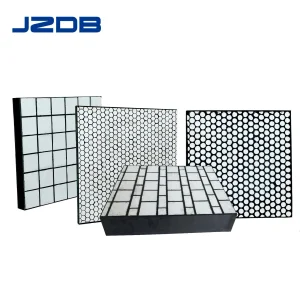
Standardized dimensions available for immediate shipment to Namibian sea terminals and inland dry mines.
Inquire NowOur group operations combine the materials expertise of Zibo Xingli Industrial Ceramics Co., Ltd and the advanced production capabilities of Hunan Yibeino New Materials Co., Ltd.
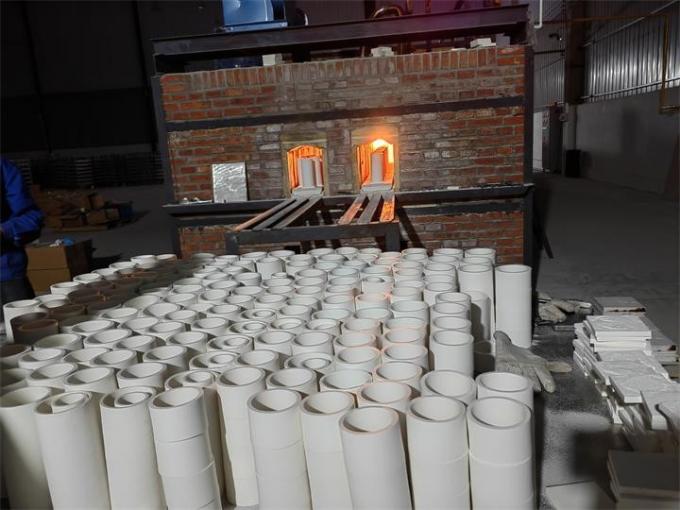
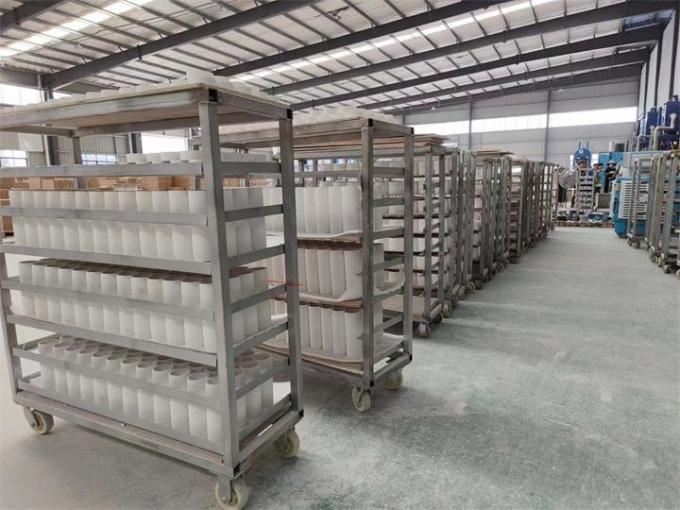
Zibo Xingli Industrial Ceramics Co., Ltd specializes in the manufacturing of industrial alumina ceramic, zirconia ceramic, and carbon-silicon products. Focus areas include wear-resistant ceramic ball grinding media, alumina lining, ceramic liner, ceramic pipe, and inert alumina balls for catalyst support. Their material sciences foundation ensures our raw ceramic tiles have high crystalline purity and wear performance.
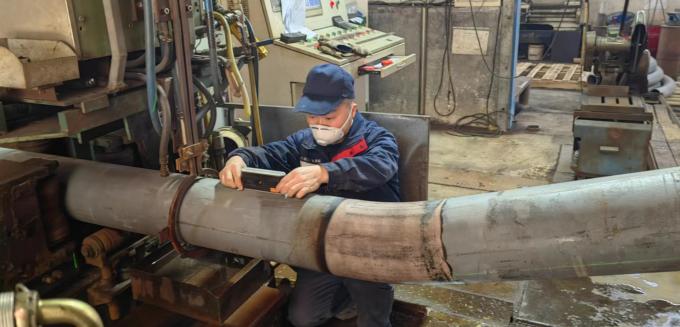
Hunan Yibeino New Materials Co., Ltd manages our ISO 9001:2015 quality system certified operations. Through integrated design, manufacturing, and installation frameworks, we ensure consistency from raw material inputs to final delivery. Our products are exported to industrial operations globally, including the United States, Germany, Sweden, India, Turkey, Italy, Japan, South Korea, and Russia.
Our engineering designs are backed by multiple international patents, demonstrating our commitment to technology and optimization:
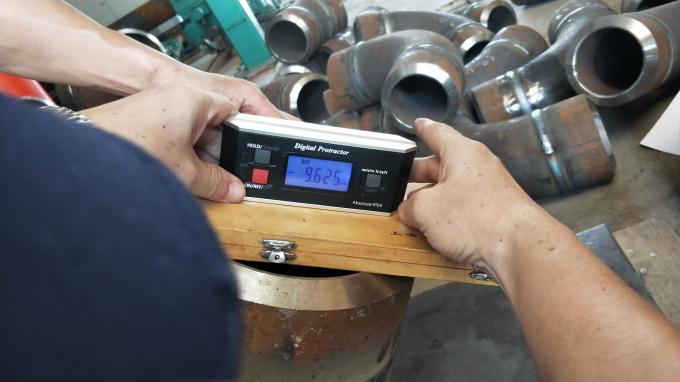
All products are produced under certified systems. Strict quality control inspections are performed before delivery to maintain consistent component performance.
We provide ongoing engineering support for Namibian mines and material handling operations, from initial design to installation.
Our application engineers conduct initial technical reviews, analyzing drop heights, bulk density, particle size distribution, moisture levels, and velocity to recommend an appropriate composite liner design.
After analyzing operating parameters, we draft 2D/3D mechanical drawings detailing custom liner geometry, mounting arrangements (stud weld vs. bolt), and ceramic patterns to ensure fitment.
We provide technical instruction for local mining contractors, support during maintenance shutdowns, and have a 48-hour domestic target response time for installation assistance.
Investing in R&D to meet the needs of the Namibian mineral sector.
Modern mining companies in Namibia are focusing on predictive maintenance. Our current research initiatives target the integration of physical wear-sensor loops directly inside the rubber matrix of our composite liners.
When a ceramic tile wears thin or is damaged, the sensor circuit opens, transmitting a diagnostic signal to the plant SCADA system. This allows operators to plan liner replacements during scheduled outages, preventing catastrophic plate failures and unexpected chute damage.
Namibian environmental regulations encourage reduction in noise pollution and chemical residues. The vulcanized rubber component of our composite wear liners absorbs structure-borne noise, reducing noise levels around transfer stations by up to 15-20 dB compared to bare steel plate.
Additionally, we are developing chemical-resistant rubber compounds designed to prevent heavy metal leaching when exposed to acid water in wet-processing and leaching circuits.
Answers to common engineering queries regarding installation, design limits, and material selection.
ZTA composite liners combine the hardness of Alumina with the toughness of Zirconia. This formulation increases impact resistance, making it suitable for mines where rock drop heights exceed 2.5 meters or mineral particle size exceeds 100mm. While standard 92% Alumina may fracture under direct high impact, ZTA absorbs energy with less cracking.
Attachment methods depend on the chute design and maintenance requirements. The most common method involves welding threaded studs onto the back of the liner's steel plate, allowing it to be bolted from the outside. Countersunk bolt holes or direct plug welding onto the structural steel frame are also available options.
Our standard rubber-ceramic-steel composites are rated for continuous service temperatures between -40°C and +80°C. For high-temperature conveyor systems or dryers, we utilize specialized heat-resistant rubber compounds rated up to 150°C. For temperatures exceeding this threshold, we recommend direct-weld ceramic lining configurations without a rubber backing.
We use a high-temperature vulcanization process where raw rubber is cured directly against chemically prepared ceramic tiles and steel plates. Our process achieves adhesion strength exceeding 8.0 MPa. The ceramic tiles are typically designed with tapered, interlocking profiles to ensure mechanical containment even under high-shear operations.
Yes. By utilizing hexagonal or small-format cylindrical ceramic tiles embedded in a flexible rubber backing, the lining material can conform to curved surfaces. We engineer and pre-form these composite sheets to fit specific radius geometries prior to delivery, minimizing on-site modifications.
Consult with our wear engineers to develop customized steel-ceramic composite liner drawings matching the specifications of your Namibian mining operation.
Send Inquiry Now Xingli Industrial Ceramics