China Top Steel-Ceramic Composite Connectors Exporter & Manufacturers

High-Wear Interface Engineering, Industry 4.0 Precision Production, and Comprehensive Global Supply Chain Resilience for Harsh Mining, Slurry Transport & Industrial Operations.

Premium Wear-Resistant Composite Solutions

Explore our advanced engineered ceramics, composite plates, and custom fabricated structural connectors engineered for high-stress industrial interfaces.
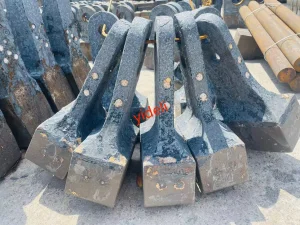
High Chromium Cast Manganese Steel Composite Hammer Head
High Chromium Cast Manganese Steel Composite Hammer Head Crusher Wear Part

Dual-metal matrix alloy design maximizing impact resistance and abrasion tolerance in heavy-duty crushers.
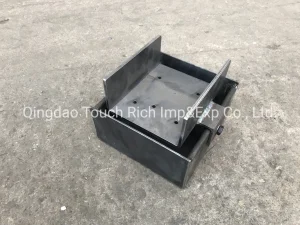
Customized Laser Cutting Welding Steel Folding
Factory Customized High Quality Laser Cutting, Welding, Steel Plate Folding

Precision fabricated structural metal backing components for integrated ceramic-to-steel composite modules.
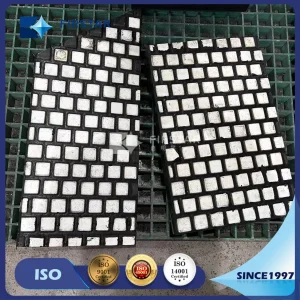
Alumina Ceramic Rubber Backed Steel Wear Liner
Abrasion Resistant Alumina Ceramic Rubber Backed Steel Wear Liner for Mineral Protective

Highly effective tri-layer design combining structural steel, dampening rubber, and wear-resistant alumina.
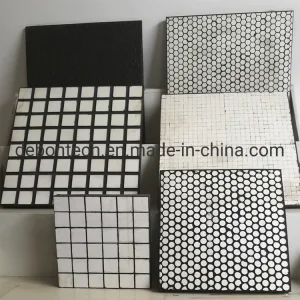
Ceramic Lined Liners for Coal Chute
Ceramic Lined Liners for Coal Steel Chute and Pipe

Engineered internal linings reducing drag, preventing blockages, and resisting continuous bulk sliding wear.
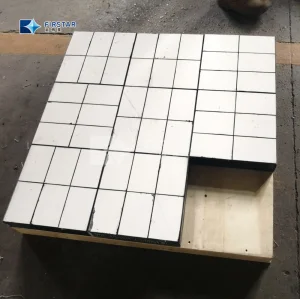
Composite Plate Steel Rubber ZTA Tiles
Composite Plate Steel & Rubber Backed Zta Ceramic Tiles

Zirconia Toughened Alumina (ZTA) offering superior fracture toughness over standard alumina substrates.
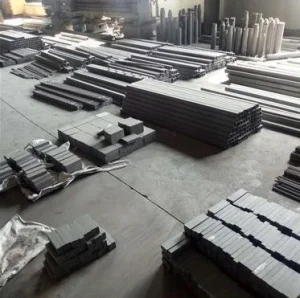
RBSiC Silicon Carbide Bricks
High Grade Durable Advanced Economic Rbsic Carbide Bricks

Reaction-bonded silicon carbide tiles designed for maximum chemical stability and thermal wear conditions.
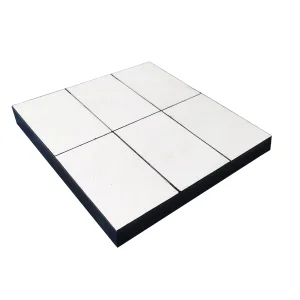
Chute Lined ZTA HPA Alumina Liner
Chute Lined Zta Hpa 95% 92% Alumina Ceramic Wear Liner

Highly optimized high-purity alumina ceramics structured for chutes handling heavy bulk materials.
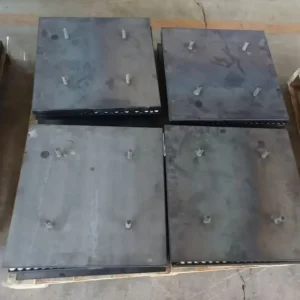
Ceramic Rubber Steel Composite Liner
(ceramic+rubber+steel composite liner) Wear Resistant Alumina Combined Rubber Liner

Integrated wear mitigation assembly that acts as a comprehensive barrier for pipelines and hoppers.

Steel-Ceramic Composite Connectors: Global Engineering Trends

An in-depth analysis of interface wear mechanics, advanced bonding formulations, and the shifts in global industrial procurement.

Modern Interface Wear Physics

Traditional structural steel alloys, even high-hardness manganese grades, rapidly degrade when subjected to extreme particulate impingement. The transition to Steel-Ceramic Composite Connectors represents a paradigm shift. By bonding sintered alpha-alumina or reaction-bonded silicon carbide (RBSiC) directly to carbon steel substrates, engineering plants combine the structural ductility of metals with the extreme hardness of technical ceramics.

Global Procurement Demands

Procurement teams across Germany, the United States, and Australia are prioritizing extended system maintenance intervals. With the cost of downtime exceeding tens of thousands of dollars per hour, procurement focuses heavily on weldability, structural integrity, and interface shear resistance. Our composite assemblies guarantee structural retention under thermal cycle spikes and mechanical vibrations.

The Ceramic Matrix Evolution

From 92% purity alumina tiles to multi-component ZTA (Zirconia Toughened Alumina) matrices, modern ceramics are highly customized. The addition of zirconia crystals induces transformation toughening—when micro-cracks form, the local stress triggers a phase transition that compresses the crack tip, preventing catastrophic failure in high-impact chutes and valves.

ISO 9001

Certified Management Systems

15+ Years

On-Site Engineering Experience

20+ Countries

Exporting to Americas, Europe & Asia

Zero Defect

Raw Material & Sintering Inspection

China Factory 4.0: Supply Chain Resilience & Efficiency

Combining structural automation, material clustering, and strict manufacturing standards to deliver globally competitive structural connectors.

Optimized Ceramic Manufacturing Infrastructure

China's industrial ceramic clusters, particularly in Shandong and Hunan, benefit from extensive localized raw material extraction, state-of-the-art tunnel kilns, and automated cold isostatic pressing (CIP) setups. This localized concentration enables us to control cost, monitor material impurities at the PPM level, and maintain short production cycles for customized ceramic-to-metal connectors.

By incorporating computer-guided high-precision laser cutting, mechanical folding, and robotic welding, we guarantee precise geometric tolerances for our backed wear assemblies. The physical alignment between structural steel backing plates and the ceramic lining ensures smooth flow transitions, minimizing friction coefficients and eliminating material build-up in pneumatic systems.
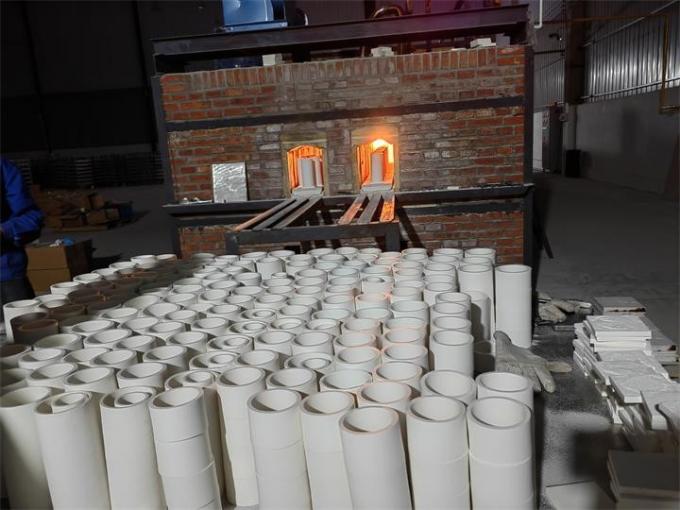
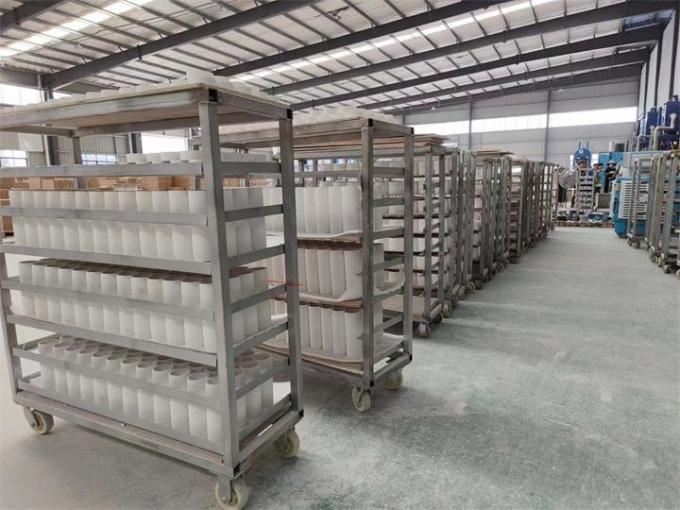
Industrial Ceramic Sintering Kiln Production Line Advanced Metal Fabricating and Pressing Station

Core Industry Capabilities & Technical Expertise

Combining the capabilities of two major industrial entities: Zibo Xingli Industrial Ceramics Co., Ltd. and Hunan Yibeino New Materials Co., Ltd.

Zibo Xingli Industrial Ceramics Co., Ltd.

Specializing in the production of premium industrial alumina ceramics, zirconia ceramics, and carbon-silicon products. Focus areas include:

  • High-purity Wear-Resistant Ceramic Ball Grinding Media
  • Alumina Linings and Custom Wear Plates
  • Heavy-Duty Ceramic Liners and Curved Pipeline Segments
  • Inert Alumina Balls for Catalyst Bed Supports in Petrochemical Reactors

Hunan Yibeino New Materials Co., Ltd.

Certified under the ISO9001:2015 and ISO14000 standards. Integrates design, manufacturing, and technical support services into a comprehensive quality management system:
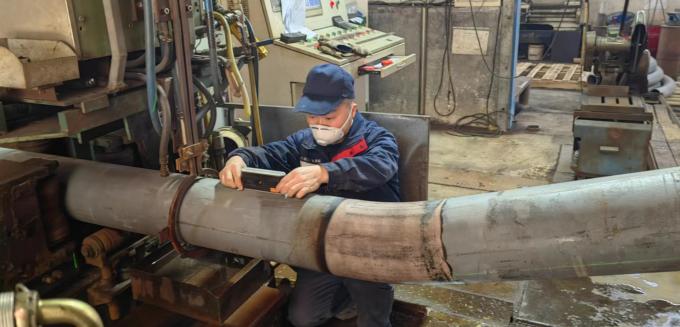
  • Complete traceability from chemical raw material procurement to final inspection.
  • Globally oriented logistics, with ongoing supply agreements across the USA, Germany, Sweden, India, Italy, Spain, Japan, Russia, and Vietnam.
  • On-site structural evaluation and customized anti-wear system layout design.
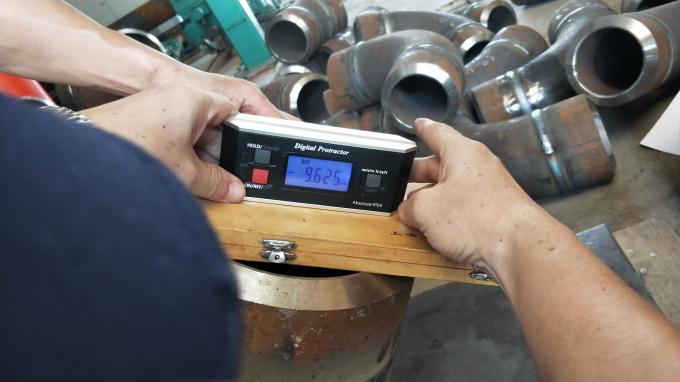
Pneumatic Ceramic Lined Pipe Inspection and Testing Heavy-duty Chute Lining Panel Assembly Stage

Engineering Advantages, Patents & Services

Comprehensive wear evaluations and innovative mechanical patents designed to protect equipment and optimize bulk handling systems.

Proprietary Design Patents

Our continuous commitment to research and development has yielded several critical system design patents, ensuring mechanical reliability and streamlined installation:

01
Anti-Clogging Pipe Elbow Design:

"A kind of elbow of pump pipe discharge anti-clogging pipe" - optimizing slurry distribution and flow trajectory to prevent material build-up.

02
Lining Board Installation Structure:

"A lining board installation structure" - utilizing mechanical stud locking systems to resist thermal cycles and shear vibrations.

03
Advanced Conveying Systems:

"A conveying device for ceramic-lined pipes" and "A lining board processing console" - maintaining manufacturing accuracy across long pipeline runs.

Global Service Cycle

01
Pre-Sales Consulting

Detailed analysis of operating environments, media speed, impact angle, and chemical exposure prior to component recommendations.

02
Precision On-Sales

Custom CAD/SolidWorks design and drawing confirmation. Full physical integration of composite matrices with current structural layouts.

03
After-Sales Support

Comprehensive installation support, tracking system lifespans, and emergency on-site responses within 48 hours for domestic pipelines.
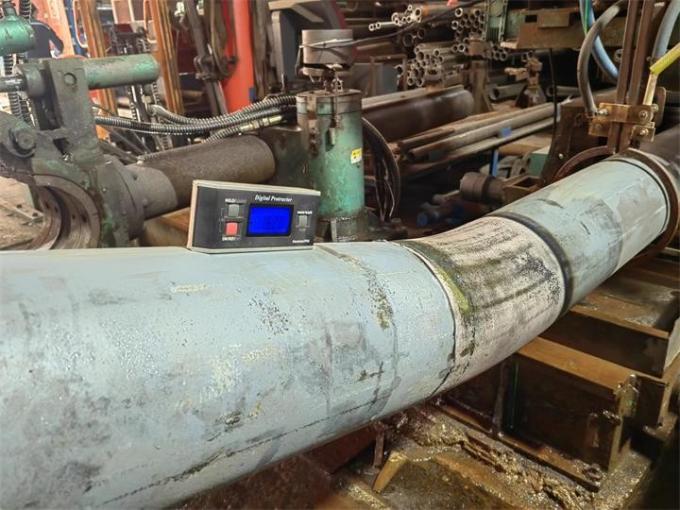
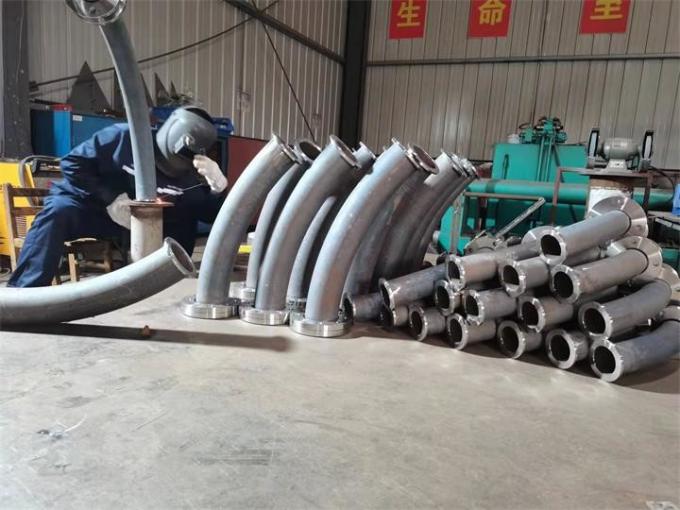
Quality Management System Auditing Stage Final Dimensions and Weld Prep Geometry Inspection

Engineering FAQ: Steel-Ceramic Composite Connectors

Expert answers addressing structural integration, material parameters, bonding physics, and application profiles.

Q1: How do you address the coefficient of thermal expansion mismatch between steel and ceramics? +
Structural carbon steel has a thermal expansion coefficient of approximately 12 x 10^-6/K, whereas alumina ceramics expand at about 8 x 10^-6/K. For operating environments subject to rapid thermal cycles, we integrate an intermediate vulcanized rubber layer or apply custom structural expansion joints. The rubber layer acts as a mechanical dampener, absorbing shear stresses caused by differential expansion.
Q2: What is the benefit of ZTA (Zirconia Toughened Alumina) over standard alumina composites? +
Standard 92% or 95% alumina ceramic tiles provide high abrasive wear resistance, but can crack under high-impact conditions. ZTA integrates fine zirconia particles within the alumina matrix. When a crack begins to propagate, stress-induced transformation transforms the tetragonal zirconia phase into a monoclinic phase, expanding volume, pinching the crack tip, and arresting fracture development.
Q3: What methods are used to secure the ceramic tiles onto the steel backing plates? +
We employ three primary installation methods depending on the application temperature and mechanical load: high-bond epoxy adhesives (under 150°C), weldable metal cups with matching ceramic caps (up to 350°C), or mechanical stud-fastening assemblies that lock the structural backing directly into the system chassis.
Q4: How do reaction-bonded silicon carbide (RBSiC) bricks compare to alumina under chemical wear? +
RBSiC provides superior resistance to highly acidic or alkaline slurry systems. While alumina remains the choice for dry abrasive sliding wear, RBSiC bricks offer excellent thermal shock resistance, flat tolerances over large dimensions, and high chemical stability, making them ideal for FGD systems, cyclones, and mining pipelines.
Q5: What certifications govern your production of pneumatic slurry valves? +
All pneumatic slurry valves and piping systems are manufactured under ISO9001:2015 quality standards. Sintering processes, weld geometries, gate actions, and casing pressures are systematically tested to ensure complete seal reliability and wear prevention under extreme pressure cycles.
Q6: Can we customize ceramic-lined parts for non-standard equipment layouts? +
Yes. Our engineers analyze CAD drawings from our partners to design custom ceramic shapes, mitered pipe bends, and tailored backing frames. We ensure that joints between segments align to minimize internal turbulence, reduce wear, and maintain flow consistency.

Comprehensive Engineered Ceramic Systems

Discover our complete line of custom ceramic components, chemical linings, and process machinery wear parts.
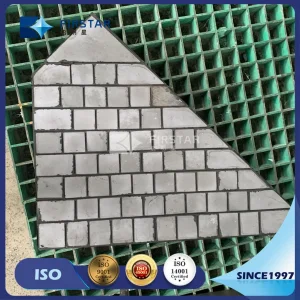
Silicon Carbide Wear Liner
Premium Silicon Carbide Wear Liner for Harsh Environments

High thermal shock stability and acid-alkali corrosion protection for harsh processing lines.
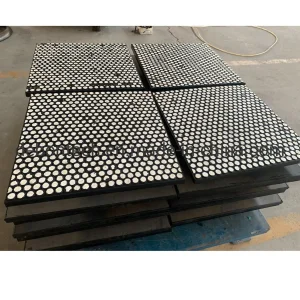
Chute Wear Plate Composite Rubber Ceramic
Chute Wear Plate Composite Rubber Ceramic Liner Steel Plate

Impact energy damping panel combining structural steel, elastomer matrix, and alumina tile inserts.
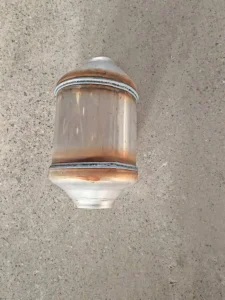
Ceramic Coated Catalytic Converter Component
Innovative Ceramic-Coated Catalytic Converter Component

Designed for optimal high-temperature exhaust flow and thermal conversion efficiency.
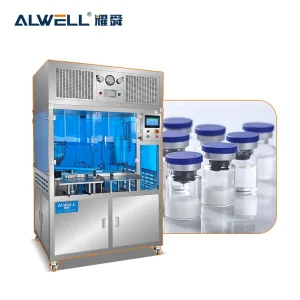
Glass Bottle Vial Washing Sealing Capping Machine
Glass Bottle Vial Washing Sealing and Capping Powder Filling Machine

Industrial packaging and filling machinery engineered with wear-resistant contact surfaces.
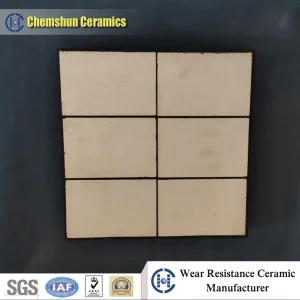
Ceramic Rubber Composite Lining Plate Supplier
Ceramic Rubber Composite Lining Plate From Alumina Oxide Tile Supplier

Alumina oxide mosaic lining tile arrangements engineered for high abrasive conveyor chutes.
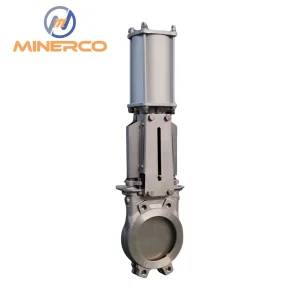
Ceramic Lined Pneumatic Slurry Knife Gate Valve
China ISO9001 Ceramic Lined Stainless Steel Pneumatic Slurry Knife Gate Valve

High performance sliding gate valve utilizing custom internal ceramic rings for slurry control.
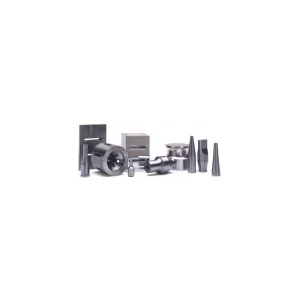
Ultrasonic Components for Welding System
Ultrasonic Components for Different Welding System

High-precision acoustic transducers and components designed for thermoplastic welding assemblies.
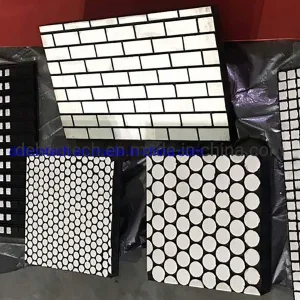
Wear Resistant Ceramic Rubber Composite Wear Liner for Silo
Wear Resistant Ceramic Rubber Composite Wear Liner for Silo with 92% Mosaic Tile

Flexible mosaic tile sheet integrated with rubber backing, designed for easy contour wrapping inside silos.