How to Optimize Temperature Resistance in Steel Ceramic Materials?

Time:2026-06-07 Author:Mason
0%

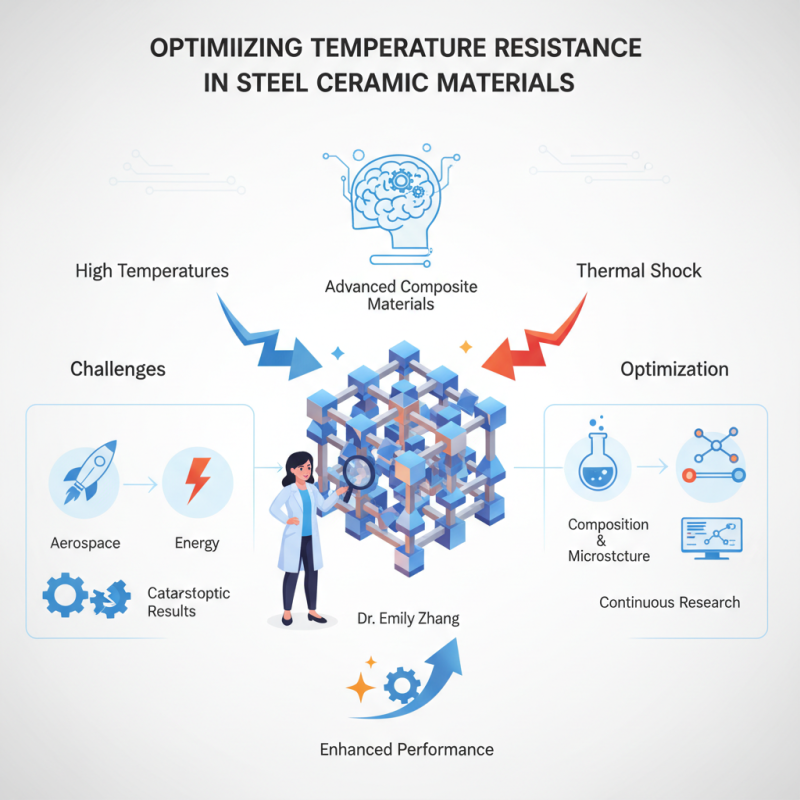
In the evolving field of materials science, the need to optimize temperature resistance of steel-ceramic materials has become increasingly vital. Dr. Emily Zhang, a leading expert in advanced composite materials, emphasizes this importance, stating, "Enhancing temperature resistance in steel-ceramic composites can significantly improve their performance in extreme conditions."

Temperature resistance is crucial in many industries, from aerospace to energy. Steel-ceramic materials face unique challenges. These composites must withstand high temperatures and thermal shock. Their failure can lead to catastrophic results, making optimization a priority for researchers and engineers alike.

However, achieving optimal performance is not always straightforward. Each component in the steel-ceramic matrix must be carefully considered. Variations in composition and microstructure can lead to unexpected behaviors. Continuous research is essential to refine these materials. The journey to optimize temperature resistance of steel-ceramic materials is filled with complexities that necessitate ongoing dialogue and expertise in the field.
How to Optimize Temperature Resistance in Steel Ceramic Materials?

Understanding the Thermal Properties of Steel Ceramic Materials

Steel ceramic materials exhibit unique thermal properties that contribute to their temperature resistance. Understanding these properties is crucial for optimizing their applications. The thermal conductivity of steel ceramics allows for quick heat dissipation. Meanwhile, their thermal expansion coefficient needs careful consideration. Mismatched expansion can lead to cracking under thermal stress.

When working with these materials, a few tips can enhance temperature resistance. First, consider optimizing the material composition. Adjusting the ratio of steel to ceramic can improve thermal stability. Experimenting with additives might also help in achieving desired thermal properties.

Another important aspect is the manufacturing process. Ensure optimal firing temperatures are maintained during production. A controlled cooling rate post-firing can minimize internal stresses. Keeping these factors in mind can lead to better performance in high-temperature environments. However, the balance between strength and thermal resistance is often a challenge. More research may be needed to further develop improved steel ceramic materials.

Factors Affecting Temperature Resistance in Steel Ceramics

Temperature resistance in steel ceramic materials relies on various factors. One critical aspect is the composition of the ceramic phase. A well-selected blend of oxides and carbides can significantly enhance thermal stability. These compounds contribute to the structural integrity when exposed to extreme heat. The matrix structure also plays a vital role. A fine, uniform microstructure typically offers better resistance to thermal shock.

Another influential factor is the sintering process. The temperature and duration of sintering can affect porosity and overall material strength. High temperatures often result in denser materials with increased load-bearing capabilities. However, this can lead to potential issues, like grain growth, which might weaken the structure under thermal stress. Adjusting the sintering parameters is essential but can be tricky.

The interaction between steel and ceramic components adds complexity. The bonding interface must withstand thermal expansion differences. This mismatch can lead to cracks or failures when subjected to thermal cycling. Understanding these interactions requires a deep knowledge of material science. This interplay can be both a challenge and an opportunity for further innovations. Balancing these factors is crucial for developing high-performance steel ceramic materials.

Temperature Resistance in Steel Ceramic Materials

Methods for Enhancing Heat Resistance in Steel Ceramic Compositions

Heat resistance in steel ceramic compositions is crucial for various industrial applications. These materials are often exposed to extreme temperatures, making their performance essential. One effective method for enhancing heat resistance is the incorporation of oxide additives. Studies from reputable material science reports indicate that adding zirconia can improve thermal stability significantly. For instance, the addition of just 10% zirconia can enhance the thermal shock resistance by over 40%.

Another approach is optimizing the firing temperature during the production of steel ceramic materials. Balancing the firing conditions can lead to improved microstructural characteristics, which in turn enhances overall heat resistance. Research suggests that firing at higher temperatures can lead to more uniform grain sizes. This uniformity is vital as it minimizes weak points that could fail under thermal stress.

Despite these advancements, challenges persist. For example, achieving a homogeneous blend of materials remains difficult. Inconsistencies can lead to variations in performance. Certain combinations may not yield the desired thermal properties, posing risks in high-stress environments. Continuous assessment and refinement of these methods are necessary to ensure the reliability of steel ceramic composites under extreme conditions.

Testing and Evaluating Temperature Resistance Effectiveness

Testing the temperature resistance of steel ceramic materials is crucial. Engineers often utilize standardized tests. These tests help identify thermal properties and limitations. Materials should withstand high temperatures without degrading. Specific metrics, like thermal conductivity and expansion, guide material selection.

Evaluating effectiveness involves real-world scenarios. Simulating extreme conditions provides insights. Observing performance during thermal cycling reveals vulnerabilities. In practice, microstructural analysis helps identify weaknesses in materials. Sometimes, unexpected failures occur, prompting a reevaluation of tests.

It's vital to ensure test conditions reflect actual application scenarios. Limited data can misguide material selection. Engineers need broad datasets to make informed decisions. Continuous testing and refining processes enhance reliability. Ultimately, robust evaluation mechanisms lead to better material choices.

How to Optimize Temperature Resistance in Steel Ceramic Materials? - Testing and Evaluating Temperature Resistance Effectiveness

Material Type Max Temperature Resistance (°C) Thermal Conductivity (W/m·K) Durability (cycles) Testing Method
Steel-Ceramic Composite A 1200 45 5000 Thermal Shock Test
Steel-Ceramic Composite B 1500 30 6000 High-Temperature Oven Test
Steel-Ceramic Composite C 1300 35 4500 Microwave Heating Test
Steel-Ceramic Composite D 1400 40 5500 Rapid Thermal Cycling Test

Applications of High-Temperature Resistant Steel Ceramics in Industry

High-temperature resistant steel ceramics play a crucial role in various industries. They are essential in sectors like aerospace, automotive, and power generation. These materials can withstand extreme temperatures while maintaining structural integrity. Their unique properties allow for efficient performance in high-stress environments.

In aerospace, high-temperature resistant steel ceramics are used in turbine engines. They help improve fuel efficiency and reduce emissions. The ability to operate under severe conditions enhances performance and safety. In the automotive sector, these ceramics are applied in brake systems. They offer durability and reliability during high temperature operation. This minimizes wear and enhances vehicle safety.

However, achieving optimal temperature resistance can be challenging. The development process often requires balancing composition and manufacturing methods. Inconsistent results can occur, leading to performance issues. This area needs careful evaluation to ensure reliability in real-world applications. Continuous research is essential to enhance the field of steel ceramics, addressing limitations and pushing boundaries.

FAQS

: What factors influence temperature resistance in steel ceramics?

: The composition of the ceramic phase and matrix structure are critical. Uniform microstructure enhances thermal shock resistance.

How does the sintering process affect steel ceramics?

Sintering temperature and duration impact porosity and strength. High temperatures create denser materials but may cause grain growth issues.

Why is the interaction between steel and ceramic important?

The bonding interface must handle thermal expansion differences. Mismatched expansions can cause cracks under thermal cycling.

What role do oxide additives play in heat resistance?

Zirconia is a common oxide additive. Adding 10% zirconia can improve thermal shock resistance by over 40%.

How can firing temperature optimize heat resistance?

Higher firing temperatures can create uniform grain sizes. This uniformity reduces weak points that may fail under stress.

What challenges exist in enhancing heat resistance?

Achieving a homogeneous blend can be tough. Inconsistent mixtures may lead to varying performance in high-stress scenarios.

How is temperature resistance tested in steel ceramics?

Engineers use standardized tests to assess thermal properties. Testing simulates extreme conditions to identify vulnerabilities.

Why is real-world scenario evaluation important?

Simulating actual conditions reveals material weaknesses. Limited data can lead to poor material selection decisions.

What can lead to unexpected failures during testing?

Sometimes, tests may not mimic actual conditions. This mismatch can cause unanticipated material performance issues.

How can continuous testing improve material reliability?

Ongoing assessment leads to better understanding of materials. Regular refinements and evaluations enhance overall reliability.

Conclusion

The article discusses various strategies to optimize temperature resistance of steel-ceramic materials, highlighting their importance in high-performance applications. It begins by elucidating the thermal properties of these composite materials, which are crucial for understanding how they withstand extreme heat. The factors influencing temperature resistance are examined, including composition, microstructure, and processing conditions.

To enhance heat resistance in steel ceramic compositions, several methods are outlined, such as optimizing the ratio of components and employing advanced fabrication techniques. Furthermore, the article emphasizes the significance of rigorous testing and evaluation processes to assess the effectiveness of these enhancements. Finally, it explores the diverse industrial applications of high-temperature resistant steel ceramics, underscoring their potential to improve performance and durability in challenging environments.

Mason

Mason

Mason is a seasoned marketing professional with a deep expertise in the company's offerings and a passion for driving brand awareness. With a strong background in digital marketing strategies, he has an innate ability to connect with diverse audiences and effectively communicate product benefits.......