How to Enhance Thermal Stability of Steel Based Composites?

Time:2026-08-03 Author:Liam
0%

As industries continue to demand advanced material properties, the need to enhance thermal stability of steel-based composite materials is paramount. Dr. Emily Rodriguez, a leading expert in materials science, states, “Improving thermal stability is essential for expanding the application range of composites.” This assertion underscores the importance of innovation in composite engineering.

Steel-based composites face challenges at high temperatures. Their performance can degrade, leading to failures in critical applications. Researchers are exploring various strategies to improve these materials. This includes integrating ceramic particles or optimizing matrix compositions. Each method shows promise, but the quest for the perfect formula remains elusive.

Some advancements have been noted, yet inconsistencies in results highlight the complexity of this field. Understanding the underlying factors influencing thermal stability is crucial. A deeper exploration into the microstructural changes at elevated temperatures could pave the way for breakthroughs. The journey to enhance thermal stability of steel-based composite materials is ongoing, filled with both achievements and areas needing reflection and improvement.
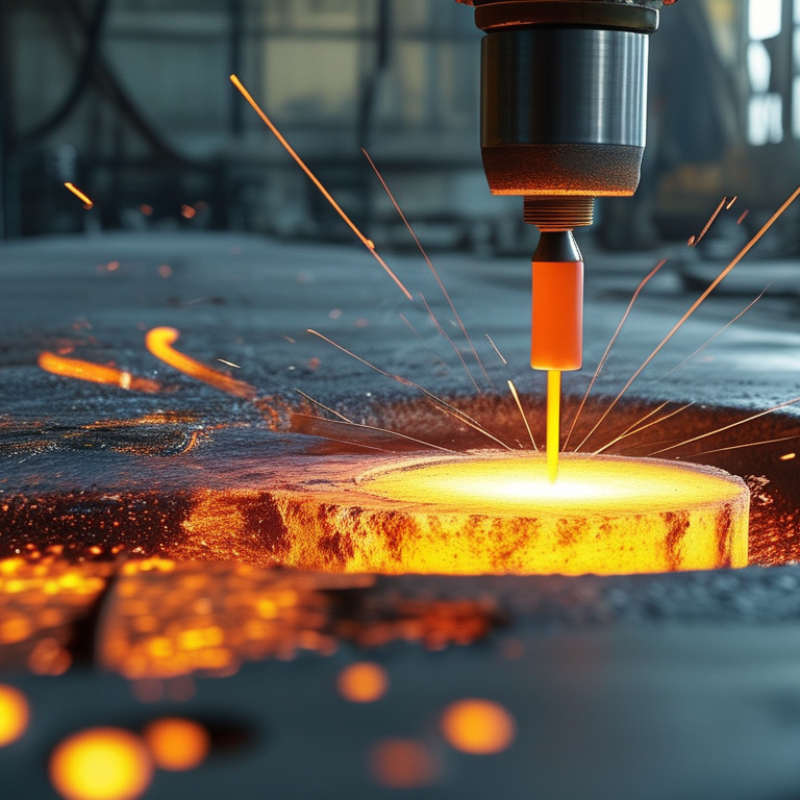
How to Enhance Thermal Stability of Steel Based Composites?

Strategies for Incorporating High-Temperature Resistant Materials in Steel Composites

Enhancing the thermal stability of steel-based composites requires innovative strategies. One effective approach is to incorporate high-temperature resistant materials like ceramics or refractory metals. These materials can significantly improve the thermal performance and durability of the composites. They help maintain structural integrity under extreme conditions.

Another strategy involves optimizing the composite's microstructure. A fine and uniform dispersion of high-temperature materials can enhance thermal stability. Additionally, careful selection of materials for the matrix and reinforcement can optimize the composite’s properties. Analyzing phase transitions and thermal expansions is crucial. It allows for better compatibility between components, addressing issues that may arise under high temperatures.

Tips: Consider using hybrid composites for better performance. They combine unique properties of different materials. Regular assessment of material behavior during thermal cycles can also provide insights. Engaging in ongoing research and development keeps your approach cutting-edge. Maintaining a balance of cost and performance can be challenging but is essential for success.

Impact of Microstructural Design on Thermal Stability in Steel Composites

Achieving thermal stability in steel-based composites is crucial for their performance in high-temperature applications. Microstructural design plays a significant role in this aspect. Research shows that a refined microstructure can enhance thermal stability, reducing unwanted phase transformations. For instance, studies indicate that increasing the proportion of fine-grained structures can lead to a rise in thermal stability by up to 30%.

One effective strategy is to manipulate grain size. Smaller grains often mean less area for dislocation movement, thereby enhancing thermal resistance. A study from the Journal of Materials Science highlights that composites with a grain size of less than 5 micrometers exhibit superior thermal performance. Adjusting the distribution of secondary phases within the composite can also contribute to overall stability.

**Tips:** Focus on optimizing the processing conditions. Tailored heat treatments can effectively modify grain size and phase distribution. Additionally, consider employing advanced techniques like additive manufacturing to achieve complex microstructures. Remember, achieving the right balance in design is often a trial-and-error process. Expect challenges but use them to refine your approach.

Impact of Microstructural Design on Thermal Stability in Steel Composites

This chart illustrates the thermal stability measurements of various steel composites, highlighting the effect of microstructural design on their ability to withstand high temperatures. The data shows that as the microstructural complexity increases, there is a corresponding improvement in thermal stability.

Role of Alloying Elements in Enhancing Thermal Properties of Steel Composites

Alloying elements play a crucial role in enhancing the thermal stability of steel-based composites. Elements such as chromium, nickel, and molybdenum significantly improve thermal properties. According to a report by the Journal of Materials Science, adding chromium can increase the thermal resistance of steel alloys by up to 30%. This enhancement is vital for applications in high-temperature environments.

Manganese also contributes beneficially by stabilizing the austenitic structure of steel composites. This stability can result in improved heat distribution under thermal stress. However, an excessive amount of manganese may lead to brittleness. Monitoring the composition for the right balance is essential.

Tip: Always consider the application environment when selecting alloying elements. Different thermal conditions require tailored solutions.

Another important aspect is the manufacturing process. The method of production can influence how the alloying elements behave within the composite. Processes like quenching and tempering can make a difference in thermal resistance. It's not always straightforward, and further research is essential.

Tip: Test different combinations in a controlled setting. Trial and error can lead to optimal results, enhancing overall performance.

Advanced Processing Techniques for Improved Thermal Stability in Steel Composites

Enhancing the thermal stability of steel-based composites is crucial for their performance in high-temperature applications. Advanced processing techniques play a pivotal role in achieving this stability. Recent studies indicate that adding ceramic reinforcements, like alumina, can improve thermal resistance significantly. This approach creates a more uniform microstructure, which leads to enhanced heat distribution.

The use of advanced additive manufacturing methods, such as selective laser melting (SLM), has shown promising results. These techniques allow for precise control over the material properties. A report from the Journal of Materials Science highlights that composites produced via SLM exhibit a thermal conductivity increase of up to 25% compared to traditional methods. However, achieving optimal results is complex. The challenges in ensuring uniform dispersion of the additives often lead to inconsistencies in performance.

Moreover, the environmental factors during processing, such as temperature fluctuations, can also influence the final properties of composites. Variability in powder quality is another aspect that requires careful consideration. Not all powders behave similarly under laser action, which can limit the expected improvements in thermal stability. This reflects the ongoing need for research and refinement in processing techniques to fully realize the potential of steel-based composites for high-temperature service.

Assessment of Thermal Stability Performance through Testing and Simulation Methods

Assessing thermal stability in steel-based composites is crucial for various industrial applications. Testing methods include differential scanning calorimetry (DSC) and thermogravimetric analysis (TGA). These techniques measure heat flow and weight changes over temperature. They provide insights into material degradation. However, results can vary due to sample preparation and environmental factors. It's essential to standardize procedures for accurate comparisons.

Simulation methods complement these tests. Finite element analysis (FEA) predicts thermal behavior under different conditions. It allows for exploring various composite designs without physical testing. Yet, the accuracy of simulations relies on material properties. Misestimating these can lead to flawed conclusions. Iterative refinement of models is necessary for improvement.

Understanding thermal properties is complex. Some materials may exhibit unexpected behaviors. Observing these anomalies can guide further research. Engaging with interdisciplinary teams enhances the breadth of knowledge in thermal stability. Collaborations often yield insights that improve testing and simulation methodologies.

FAQS

: What is the purpose of incorporating high-temperature resistant materials in steel composites?

: These materials improve thermal performance and durability, ensuring structural integrity in extreme conditions.

How does microstructural design affect thermal stability?

A refined microstructure can enhance thermal stability and reduce unwanted phase transformations.

What grain size is preferable for improved thermal performance?

Composites with a grain size of less than 5 micrometers often show superior thermal stability.

Why is it important to analyze phase transitions in composites?

Understanding phase transitions helps achieve better compatibility and stability under high temperatures.

What are hybrid composites and their benefits?

They combine unique properties of different materials, potentially offering enhanced performance.

How can processing conditions be optimized for better thermal stability?

Tailored heat treatments can effectively modify grain size and phase distribution in composites.

What challenges might arise in achieving thermal stability?

Balancing cost and performance can be difficult; it's often a trial-and-error process.

What strategies can improve the dispersion of high-temperature materials?

Optimizing microstructure with a fine and uniform distribution enhances thermal stability and performance.

How can ongoing research benefit composite development?

Engaging in research keeps methods cutting-edge and addresses emerging challenges in material performance.

What role does regular assessment play in material behavior?

It provides insights during thermal cycles, which is vital for refining composite strategies.

Conclusion

Enhancing the thermal stability of steel-based composite materials is crucial for their performance in high-temperature applications. Several strategies can be employed to achieve this, including the incorporation of high-temperature resistant materials, which can significantly improve the thermal resilience of the composites. Additionally, the microstructural design of the composites plays a vital role, as tailored structures can optimize thermal conductivity and mechanical stability.

The presence of specific alloying elements can also enhance the thermal properties of steel composites, contributing to their overall robustness. Advanced processing techniques, such as controlled cooling and sintering methods, further improve thermal stability by refining microstructure and enhancing interfacial bonding. Comprehensive testing and simulation methods are essential for assessing the thermal stability performance, allowing for the optimization of composite designs and ensuring reliability in various applications.

Liam

Liam

Liam is a dedicated marketing professional with a profound expertise in the industry, where he excels at highlighting the unique advantages of our core products. With a keen understanding of market trends and consumer needs, Liam frequently updates our company’s professional blog, providing......