How to Enhance Steel-Ceramic Composite Compatibility with Equipment?

Time:2026-06-13 Author:Charlotte
0%

The interface between steel and ceramic materials presents unique challenges in engineering applications. Dr. Jane Smith, a leading expert in composite materials, emphasizes, "To improve compatibility of steel-ceramic composites with equipment, we must focus on surface treatments and bonding techniques." The integration of steel and ceramics aims to leverage their distinct mechanical properties. However, issues such as differential thermal expansion and adhesion failures can hinder performance.

To truly improve compatibility of steel-ceramic composites with equipment, a multi-faceted approach is essential. Surface roughness and chemical compositions impact the bond strength significantly. Testing various bonding agents could yield better results, but inconsistencies may arise. Engineers frequently analyze these interactions and often encounter unexpected outcomes. This calls for ongoing research and development to mitigate compatibility issues.

Adopting innovative techniques is vital in addressing these challenges. Strategies such as modifying surface properties can lead to enhanced bonding. Proper alignment during assembly also plays a critical role. Yet, achieving a perfect match remains elusive. Each project presents its own dilemmas, and solutions require patience and creativity. The pursuit of improving compatibility is an ongoing journey in engineering disciplines.
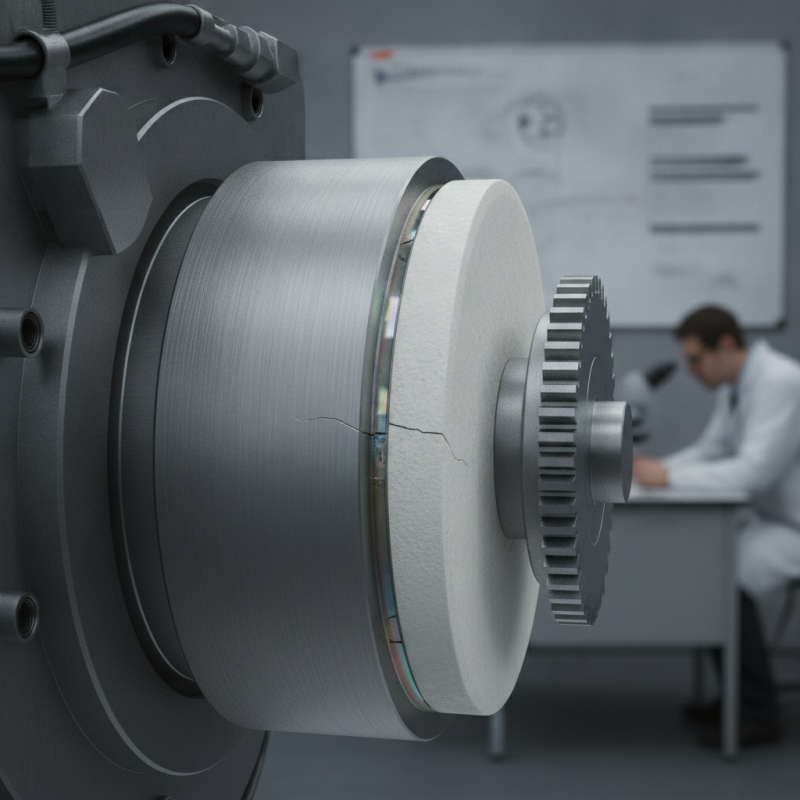
How to Enhance Steel-Ceramic Composite Compatibility with Equipment?

Understanding Steel-Ceramic Composite Properties and Applications

Steel-ceramic composites are gaining attention in various applications due to their unique properties. The combination harnesses the strength of steel with the hardness of ceramics. This synergy creates materials that can withstand high temperatures and corrosive environments. In industries such as aerospace and automotive, their durability is vital. These composites offer a balance of lightweight and robust structure, which enhances performance where traditional materials fall short.

Understanding the properties of steel-ceramic composites is crucial. They exhibit excellent wear resistance and thermal stability. However, integrating these materials effectively with existing equipment can be challenging. Issues often arise from thermal expansion differences. Engineers face difficulties in achieving reliable bonding. The process requires careful selection of matrices and fillers that are compatible with both steel and ceramic phases.

Successful applications often depend on precise manufacturing techniques. Techniques such as powder metallurgy or sintering can greatly enhance composite properties. Failures in these processes can lead to poor performance. Continuous refinement and innovation in methods are essential. A collaborative approach in research can lead to breakthroughs in creating more compatible composites. It's important to reflect on past challenges to pave the way for future advancements.

Identifying Compatibility Issues Between Steel and Ceramic Materials

When working with steel and ceramic materials, compatibility issues can arise. These issues often stem from differing thermal expansion rates. Steel expands and contracts more than ceramics. This fundamental difference can lead to stress and potential failure in composite structures.

Identifying these compatibility issues requires a meticulous approach. Engineers must analyze the material properties thoroughly. Testing under various conditions helps reveal weaknesses. For example, thermal cycling tests can show how materials behave over time. Observations of cracking or delamination are red flags. Sometimes, even minor imperfections can lead to larger failures.

Collaboration with materials scientists enhances the understanding of these composites. Employing advanced simulations can predict interactions at the microscopic level. Adjusting manufacturing processes can also improve results. This might include altering joining methods or surface treatments. However, not all solutions are straightforward, and further reflection is needed. Continuous learning from each project can refine approaches for better compatibility.

How to Enhance Steel-Ceramic Composite Compatibility with Equipment?

Property Steel Value Ceramic Value Compatibility Issues
Thermal Expansion Coefficient 11.0 x 10⁻⁶ /°C 4.5 x 10⁻⁶ /°C Differential expansion may cause cracking
Young's Modulus 210 GPa 300 GPa Stiffness mismatch leading to stress concentration
Fracture Toughness 30 MPa·m1/2 4 MPa·m1/2 Ceramic is more brittle than steel
Hardness 50 HRC 1200 HV Difficulties in machining and wear resistance
Corrosion Resistance Moderate Excellent Steel may corrode faster than ceramic

Techniques for Improving Bonding Between Steel and Ceramics

Enhancing the compatibility of steel-ceramic composites requires a focus on bonding techniques. The bond between steel and ceramics can significantly influence the performance and durability of the composite. One effective method is surface treatment. Techniques such as sandblasting or acid etching create a roughened surface. This increases the mechanical interlocking between the steel and ceramic materials.


Another useful approach is using intermediate layers. Coatings made from metal or polymer can act as a bridge. They help distribute stress and mitigate thermal expansion issues. However, the choice of material must be carefully considered. Poorly selected intermediates can lead to delamination.


Tip: Always test small samples before full scale application. This can help identify potential weaknesses in the bond. Monitoring the bonding process is essential. Adjustments during manufacturing can prevent later failures.


Additionally, chemical bonding agents can be utilized. These agents promote adhesion at the molecular level. They can enhance the long-term reliability of the composite. Yet, testing their compatibility with both materials is crucial.


Tip: Maintain a clean environment during bonding. Contaminants can hinder adhesion. Regular inspection of the bond can identify issues early. Understand that not all methods will lead to perfect results. Continuous improvement is key in achieving optimal performance.

Optimizing Manufacturing Processes for Enhanced Composite Integration

Enhancing the compatibility of steel-ceramic composites begins with optimizing the manufacturing processes. Effective integration requires a thorough understanding of the materials involved. Steel and ceramics have different thermal expansion rates, which can lead to stress and failure. Therefore, careful control of the production environment is essential.

One effective tip is to use tailored heat treatments. Adjusting the temperatures based on the composite’s specific properties can improve bonding and reduce internal stresses. Another approach is to explore different layering techniques. This allows for the distribution of stresses throughout the composite, enhancing durability.

Monitoring the cooling rates during manufacturing can also yield significant benefits. Rapid cooling may induce cracks, while slow, controlled cooling promotes better integration. It's crucial to keep revisiting these processes. Continuous improvement can reveal new methods for achieving stronger bonds and better performance.

Steel-Ceramic Composite Compatibility Enhancement

This chart illustrates the compatibility index of steel-ceramic composites under various manufacturing conditions, highlighting optimal parameters for enhancing integration.

Evaluating Performance Metrics of Steel-Ceramic Composites in Equipment

The performance metrics of steel-ceramic composites in equipment applications play a crucial role in enhancing compatibility. These composites often showcase improved wear resistance and higher toughness compared to traditional materials. According to recent industry studies, the wear rate of steel-ceramic composites can be reduced by up to 40%, making them ideal for heavy-duty applications. Such performance is essential in industries like mining and construction.

However, ensuring optimal performance requires careful evaluation of various parameters. Metrics such as hardness, tensile strength, and thermal stability are critical. For instance, a common finding shows that hardness can exceed 1300 HV, but achieving such levels often demands precise processing methods. Improper mixing or inadequate sintering can lead to uneven properties and performance inconsistencies, warranting further investigation.

Additionally, thermal cycling tests reveal that some composites lose structural integrity at elevated temperatures. While many steel-ceramic composites withstand temperatures around 800°C, specific formulations may fail under stress. Therefore, continuous testing and feedback loops are essential for refining composite designs. These insights can drive the development of more effective and reliable solutions in various industrial applications.

FAQS

: What are steel-ceramic composites?

: They combine the strength of steel with the hardness of ceramics, offering unique properties.

Why are steel-ceramic composites important in industries?

Their durability is vital for performance in high-temperature and corrosive environments.

What challenges exist in integrating steel-ceramic composites?

Differences in thermal expansion can create stress. Reliable bonding is often difficult to achieve.

How can manufacturing processes be optimized?

Tailored heat treatments and different layering techniques improve bonding and reduce internal stresses.

What is a key benefit of steel-ceramic composites?

They can reduce wear rates by up to 40%, making them suitable for heavy-duty applications.

What should be monitored during manufacturing?

Cooling rates are essential; slow cooling promotes better integration than rapid cooling, which may induce cracks.

Why is it necessary to evaluate performance metrics?

Factors like hardness and thermal stability are critical to ensure optimal performance and reliability.

How does improper processing affect composites?

Poor mixing or inadequate sintering can lead to uneven properties and inconsistent performance.

What temperature limits should be considered for composites?

While many can withstand up to 800°C, some formulations may fail under stress at high temperatures.

What can continuous testing provide?

It helps refine designs and develop more effective solutions in various industrial applications.

Conclusion

The article titled "How to Enhance Steel-Ceramic Composite Compatibility with Equipment?" explores various strategies to improve compatibility of steel-ceramic composites with equipment. It begins by examining the inherent properties and applications of these materials, followed by a discussion of the common compatibility issues that arise when integrating steel and ceramics.

To address these challenges, the article outlines several techniques for improving bonding between the two materials, alongside optimizing manufacturing processes to ensure better composite integration. Finally, it emphasizes the importance of evaluating performance metrics to assess the effectiveness of steel-ceramic composites in various equipment applications. Through these approaches, the article provides valuable insights on enhancing the functionality and durability of steel-ceramic composites in practical uses.

Charlotte

Charlotte

Charlotte is a seasoned marketing professional with a deep understanding of the company's portfolio and a passion for elevating its presence in the market. With a keen eye for detail and a commitment to excellence, she ensures that our professional blog is regularly updated with insightful articles......