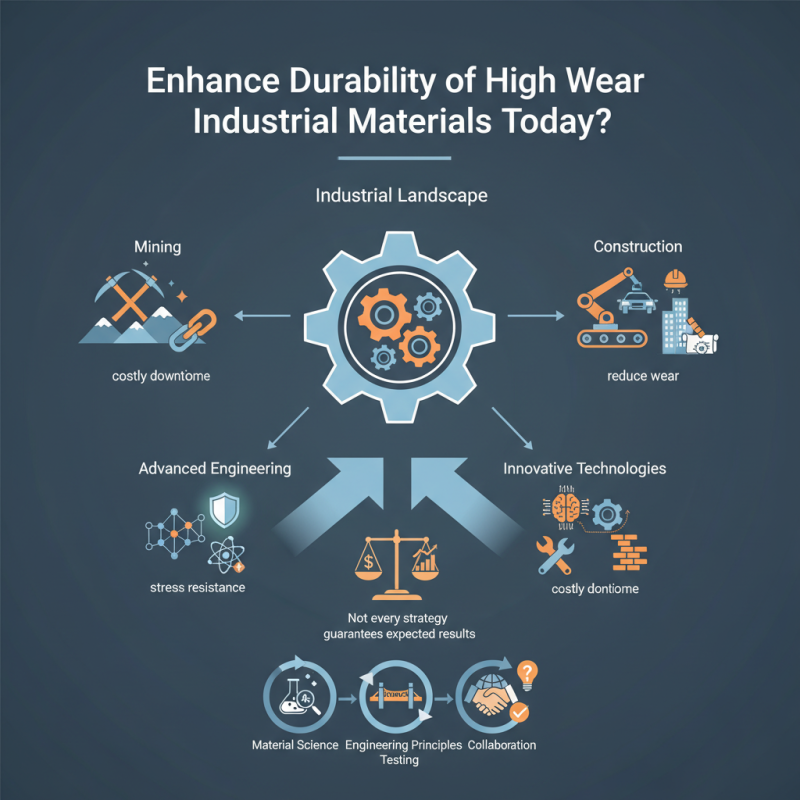
In today’s industrial landscape, the demand for durability is higher than ever. Companies strive to maximize the lifespan of their materials. This drive leads to an urgent need to enhance durability of high-wear industrial materials. Industries such as mining, manufacturing, and construction rely heavily on these materials. Weakness in these areas can lead to costly downtime.
Advanced engineering and innovative technologies offer promising solutions. These methods can improve stress resistance and reduce wear. However, challenges remain in balancing cost and performance. Not every strategy guarantees the expected results. Businesses must carefully evaluate their options and consider the long-term impacts.
Enhancing durability is a complex journey. It requires a deep understanding of material science and engineering principles. Experts must continuously test and adapt to new techniques. In this pursuit, collaboration between industries can foster more effective solutions. It’s essential to remain open to learning from past experiences. Embracing a reflective approach can drive better decision-making in material selection and engineering innovations.
High wear industrial materials play a critical role across various sectors. These materials endure intense conditions, making their performance essential. According to a recent report by the International Journal of Materials Research, industries face a wear rate increase of up to 30% in harsh environments. Understanding these materials can significantly influence productivity and longevity.
Applications range from mining equipment to aerospace components. For example, ultra-high molecular weight polyethylene (UHMWPE) is becoming favored due to its low friction and high abrasion resistance. Studies suggest that products made from UHMWPE have exhibited a decrease in wear-related failures by nearly 50%. This data affirms the need for specialized materials in high-stress scenarios.
Yet, there are challenges. Not all high wear materials provide consistent performance under varying conditions. Some may exhibit unexpected wear patterns, leading to potential failures. Industry experts advocate for ongoing testing and evaluation. Understanding material behaviors under stress is vital to improving outcomes. Each application brings unique demands, necessitating tailored solutions for optimal performance.
: High wear industrial materials are designed to withstand harsh conditions. They are crucial for productivity.
They help reduce wear-related failures. This can improve efficiency and extend the lifespan of equipment.
Applications range from mining equipment to aerospace components. Each requires tailored material solutions.
The integration of nanotechnology is a major trend. It enhances material strength while reducing weight.
Yes, sustainable practices are increasingly prioritized. Biodegradable options offer durability with environmental considerations.
Not all materials perform consistently. Testing helps identify unexpected wear patterns and prevents failures.
Yes, investing in staff training helps. It can ease transitions to new technologies and processes.
Adoption often requires retraining staff and adjusting processes. Initial challenges may slow down implementation.
Regular performance monitoring is crucial. It helps identify wear patterns and informs future material choices.
Engage with experts and stay informed on new research. This knowledge can foster innovative material solutions.
The article "Enhance Durability of High Wear Industrial Materials Today?" provides an in-depth exploration of the characteristics and applications of high wear industrial materials. It delves into the various factors that influence their durability, such as material composition and environmental conditions. Techniques for enhancing wear resistance are discussed, including advanced coatings and composite materials, which play a critical role in prolonging the lifespan of industrial components.
Furthermore, the article addresses future trends in the development of high durability materials, indicating a shift towards more sustainable and innovative solutions. Case studies highlight the successful application of enhanced durability materials across different industries, proving their effectiveness in reducing maintenance costs and increasing operational efficiency. Overall, the insights presented reinforce the importance of strategies to enhance durability of high-wear industrial materials, ensuring their reliability in demanding environments.

 Xingli Industrial Ceramics