China Top Steel Ceramic Materials Improve Heat Resistance

Time:2026-10-07 Author:Mason
0%

China’s steel industry produced approximately 1.019 billion tonnes of crude steel in 2023, according to World Steel Association data. This scale creates enormous demand for components that survive heat, abrasion, oxidation, and repeated thermal shock. Steel-ceramic materials offer a practical route, combining steel’s toughness with ceramics’ hardness and thermal stability.

A furnace lining may face temperatures above 1,500°C, while its surface expands and contracts during every production cycle. Small interface defects can become visible cracks. Professor Brian Cantor, a respected materials scientist, captures the design principle clearly: “Processing controls structure, and structure controls performance.” This principle helps engineers Optimize temperature resistance of steel-ceramic materials through composition, bonding, grain control, and surface treatment.

The challenge is not simply reaching a higher temperature rating. It is maintaining strength after thousands of heating cycles. World Steel Association reports also identify steelmaking as a major global energy and emissions source, while the International Energy Agency places iron and steel among the highest industrial carbon emitters. Longer-lasting ceramic-metal components can reduce replacement downtime, material waste, and avoidable energy losses.

Yet improvement is not automatic. A harder ceramic layer may resist wear but fail under sudden cooling. A tougher steel matrix may improve impact resistance but accelerate oxidation. Engineers must test real furnace conditions, not only laboratory peaks. The best design remains imperfect, especially where cost, manufacturability, and thermal performance conflict. Industry progress will depend on measured data, traceable processing, and honest evaluation of failures.
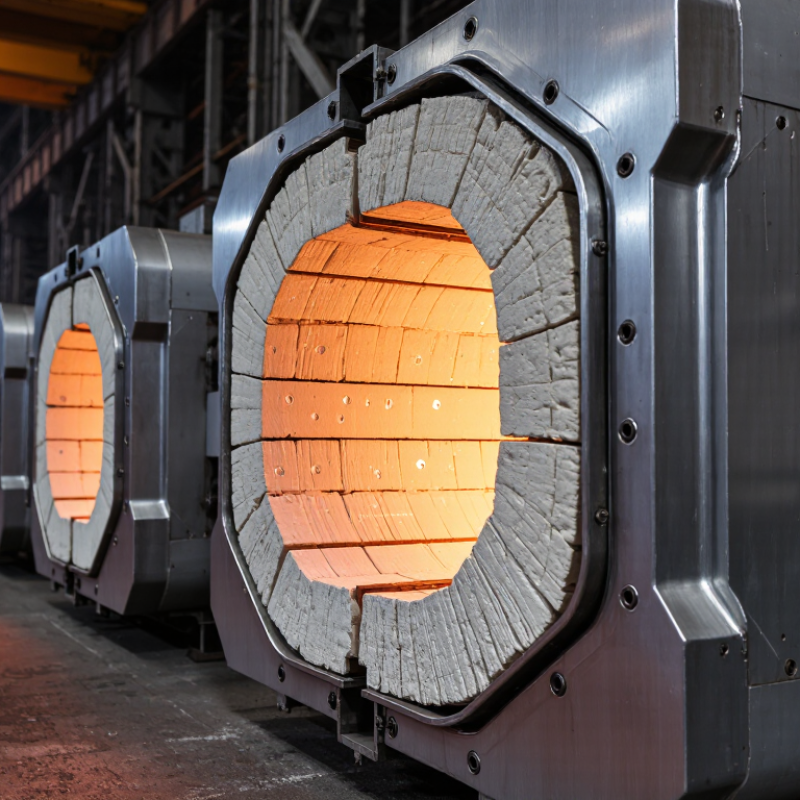
China Top Steel Ceramic Materials Improve Heat Resistance

Definition and Composition of Steel-Ceramic Materials

Steel-ceramic materials are engineered composites that combine a steel matrix with hard ceramic phases. The steel provides toughness, machinability, and structural support. Ceramic particles, fibers, or surface layers improve hardness and heat resistance. Common ceramic components include alumina, silicon carbide, zirconia, and titanium-based compounds. Their proportions vary according to temperature, load, and wear conditions.

The composition controls how the material behaves during heating and cooling. Ceramic phases resist oxidation and surface erosion, while steel helps reduce sudden fracture. A strong interface between both phases is essential. Poor bonding may create cracks around ceramic particles. In practical testing, technicians should examine thermal expansion, porosity, hardness, and repeated heat cycles. The term “steel-ceramic” is not always precise, so suppliers should provide test methods and composition data. A higher ceramic content does not automatically create a better material. It may increase brittleness.

Tips: Match the ceramic phase to the operating temperature. Check samples after repeated heating, not only after one exposure. Look for edge cracking and discoloration. Keep accurate records of furnace temperature, heating time, and cooling speed. Surface coatings can perform well, but their durability depends heavily on preparation and thickness. Claims based only on hardness deserve careful review.

Steel–Ceramic Materials: Definition, Composition and Heat Resistance

Steel–ceramic materials are composite systems that combine a steel matrix with heat-resistant ceramic phases such as alumina, silicon carbide, or titanium carbide. The steel provides toughness and manufacturability, while the ceramic phase improves hardness, wear resistance, oxidation resistance, and thermal stability.

The chart compares representative melting or decomposition temperatures of common steel matrices and ceramic constituents. Actual service temperature depends on composition, porosity, bonding quality, atmosphere, thermal cycling, and applied load. Values are approximate handbook ranges represented by a typical temperature.

Heat Resistance Mechanisms in Steel-Ceramic Materials

China’s advanced steel-ceramic materials improve heat resistance through a carefully controlled combination of metallic toughness and ceramic stability. Ceramic phases can tolerate temperatures that soften ordinary steel. They also slow heat transfer across the material.

The interface matters greatly. A well-bonded ceramic layer reduces oxidation and limits surface erosion. Fine particles create barriers against grain movement inside the steel matrix. This helps the material retain strength during repeated heating near 800–1,200°C. Practical furnace testing often examines hardness, mass loss, and crack growth after several thermal cycles.

Thermal expansion remains a difficult issue. Steel and ceramics expand at different rates, so internal stress may build during rapid cooling. Small pores can absorb some stress, but excessive porosity weakens the structure. Imperfect bonding may also produce hidden cracks beneath the surface. Careful particle distribution, gradual cooling, and suitable protective coatings can reduce these risks. The material still needs application-specific testing. Performance in a furnace may differ from performance beside flames, molten metal, or moving gases. Even a strong ceramic phase cannot prevent failure when thermal shock is severe.

China Top Steel Ceramic Materials Improve Heat Resistance - Heat Resistance Mechanisms in Steel-Ceramic Materials

Material System Typical Ceramic Phase Main Heat-Resistance Mechanism Approximate Continuous-Service Temperature Representative Thermal Conductivity Key Benefit Primary Limitation
Stainless Steel–Alumina Cermet Al2O3, typically 20–60 vol.% Refractory alumina particles reduce metal creep, slow oxidation, and interrupt heat-flow paths through the steel matrix. Approximately 700–1,000 °C, depending on composition and atmosphere Approximately 8–25 W/(m·K) Good oxidation resistance and electrical insulation compared with unmodified steel Reduced ductility and possible cracking from thermal-expansion mismatch
Stainless Steel–Zirconia Composite ZrO2, often partially stabilized with yttria Low ceramic thermal conductivity provides thermal-barrier behavior, while transformation-toughened zirconia helps resist crack growth. Approximately 600–900 °C in oxidizing service Approximately 2–8 W/(m·K) Strong thermal insulation and comparatively high fracture toughness among engineering ceramics Phase stability and interfacial reactions must be controlled during processing
Steel–Silicon Carbide Composite SiC, typically particulate or whisker reinforced High-temperature SiC stability, high hardness, and protective silica formation improve wear and oxidation resistance. Approximately 700–1,100 °C, subject to steel grade and atmosphere Approximately 15–60 W/(m·K) Excellent abrasion resistance and strong thermal-shock capability Carbon and silicon reactions may alter the steel matrix or interface
Steel–Silicon Nitride Composite Si3N4 Strong covalent bonding, low density, and good thermal-shock resistance limit deformation and crack propagation. Approximately 600–1,000 °C, depending on exposure conditions Approximately 10–30 W/(m·K) Good thermal-shock resistance and low thermal expansion Higher processing cost and potential oxidation of the nitride phase at elevated temperatures
Steel–Titanium Carbide Composite TiC Very high hardness and chemical stability reduce wear, frictional heating, and surface material loss. Approximately 700–1,000 °C in controlled or moderately oxidizing environments Approximately 12–35 W/(m·K) Excellent wear resistance and high-temperature hardness retention Brittleness and thermal-expansion mismatch can reduce resistance to thermal cycling
Steel–Titanium Diboride Composite TiB2 High melting point, strong covalent bonding, and low chemical reactivity help preserve hardness at elevated temperature. Approximately 800–1,100 °C, depending on matrix design Approximately 20–65 W/(m·K) High hardness, good electrical conductivity, and strong resistance to molten-metal erosion Difficult to machine and sensitive to poor particle dispersion
Steel with Ceramic Thermal-Barrier Coating Yttria-stabilized zirconia or alumina-based coating A porous ceramic layer lowers heat transfer to the steel substrate and provides a diffusion barrier against oxygen and corrosive species. Approximately 600–1,200 °C at the coating surface Approximately 0.8–3 W/(m·K) for porous thermal-barrier layers Large reduction in substrate temperature without changing the bulk steel composition Coating delamination, porosity changes, and thermal-cycling damage
Data note: Temperature and thermal-conductivity values are representative engineering ranges compiled from commonly reported property ranges. Actual performance depends on ceramic volume fraction, particle size, porosity, interface quality, steel grade, manufacturing process, load, atmosphere, and thermal-cycle duration.

Key Manufacturing Processes and Material Design Factors

China Top Steel Ceramic Materials Improve Heat Resistance

Improved heat resistance depends on more than choosing a ceramic grade. Material design must match temperature, pressure, friction, and thermal cycling. A steel-ceramic composite can combine steel’s toughness with ceramic’s stability, but the interface remains vulnerable. Small differences in thermal expansion may create hidden cracks during cooling.

Manufacturing control is equally important. Engineers usually begin with clean powders, controlled particle sizes, and carefully measured additives. Pressing or injection forming sets the component’s density and shape. Sintering then requires a controlled atmosphere and accurate temperature curves. Uneven heating can leave pores. It can also weaken the final surface. In practical production, ultrasonic inspection, density testing, and thermal shock trials help verify consistency. These checks are useful, but no test reveals every service failure.

Tips: Keep the ceramic layer uniform. Round sharp corners. Test repeated heating and cooling, not only peak temperature. Record furnace data for every batch. A slightly slower process may improve reliability. Design reviews should include maintenance teams, because field observations often expose problems that laboratory tests miss. Some choices may still need revision after real operation. That is not a weakness. It is responsible engineering.

Performance Advantages in High-Temperature Industrial Applications

China’s advanced steel-ceramic materials are improving heat resistance in demanding industrial environments. These materials combine steel’s mechanical strength with ceramic phases that resist oxidation, erosion, and thermal degradation. In reheating furnaces, kiln components, and heat-treatment systems, service temperatures can exceed 1,000°C. Heat matters.

The performance advantage is reduced deformation during repeated heating and cooling. A dense ceramic surface can limit scale formation, while a steel substrate helps absorb vibration and mechanical impact. The U.S. Department of Energy’s Industrial Decarbonization Roadmap identifies process heating as a major industrial energy challenge. Better thermal stability can support longer operating cycles and fewer shutdowns. That gap matters.

The World Steel Association reports that steel production contributes approximately 7–9% of global carbon dioxide emissions. Materials that retain strength at high temperatures may reduce replacement frequency and energy losses from damaged components. However, performance depends on composition, bonding quality, furnace atmosphere, and installation accuracy. Laboratory results are not enough. Practical evaluation should include thermal-shock testing, oxidation exposure, hardness measurement, and dimensional inspection under conditions aligned with ASTM or ISO procedures. Some products still show uneven results between batches, so independent testing remains necessary.

Selection Criteria and Maintenance Requirements for Long-Term Use

China Top Steel Ceramic Materials Improve Heat Resistance

Selecting steel ceramic materials for long-term service requires more than checking a maximum temperature. Start with the actual operating temperature, heating rate, mechanical load, and surrounding atmosphere. A material may resist intense heat but fail after repeated thermal shocks. Ask for test data on thermal expansion, bonding strength, abrasion resistance, and porosity. Dimensional accuracy also matters when ceramic components fit inside steel housings. Poor contact can create hot spots.

In practical use, I inspect the surface before installation and after early heating cycles. Look for hairline cracks, flaking, discoloration, loosened sections, or unusual gaps. Clean deposits with suitable non-abrasive tools. Avoid sudden cooling, especially when the component is still glowing. Gradual heating and cooling reduce internal stress. Keep inspection records with dates, temperatures, and observed changes. In practice, no selection is perfect. Some failures come from installation, not material quality. That detail deserves attention.

Tips: Confirm the real service conditions before ordering. Use calibrated temperature readings. Protect ceramic surfaces from impact during handling. Schedule inspections during planned shutdowns. Replace damaged sections early, because one small defect can spread under repeated heating. Never assume a thicker layer always performs better. A small flaw matters.

FAQS

What are steel-ceramic materials used for in high-temperature equipment?

They support reheating furnaces, kiln components, and heat-treatment systems. These applications may exceed 1,000°C. Heat matters.

How do these materials improve heat resistance?

Ceramic phases resist oxidation, erosion, and thermal damage. The steel base adds mechanical strength and vibration tolerance.

Can steel-ceramic materials reduce deformation during heating cycles?

They can limit deformation during repeated heating and cooling. A dense ceramic surface may also reduce scale formation. Results still depend on composition and bonding quality.

What operating conditions should buyers check before selection?

Check temperature, heating rate, mechanical load, and surrounding atmosphere. Include thermal shock and abrasion exposure. The maximum temperature alone is not enough.

What testing can confirm long-term performance?

Request thermal expansion, bonding strength, abrasion, porosity, and hardness data. Use thermal-shock tests and oxidation exposure. Laboratory data can disappoint without practical testing.

How should these components be inspected before installation?

Examine surfaces for hairline cracks, flaking, discoloration, and uneven gaps. Check contact areas inside steel housings. Poor contact can create hot spots.

How can maintenance extend service life?

Heat and cool components gradually to reduce internal stress. Avoid sudden cooling while surfaces remain glowing. Clean deposits with suitable non-abrasive tools.

When should damaged sections be replaced?

Replace them during planned inspections when defects appear. A small crack can spread through repeated heating. Waiting may increase downtime.

Does a thicker ceramic layer always perform better?

No. Thickness alone does not guarantee durability. Bonding, dimensional accuracy, and installation also matter. That assumption needs reconsideration.

Why should inspection records be maintained?

Record dates, temperatures, cracks, discoloration, and dimensional changes. These details reveal gradual failure patterns. Some problems come from installation, not material quality.

Conclusion

Steel-ceramic materials combine the strength and toughness of steel with the thermal stability, hardness, and wear resistance of ceramic components. Their heat resistance comes from carefully selected compositions, strong interfaces, low thermal expansion, and ceramic phases that remain stable at elevated temperatures. Through powder processing, casting, sintering, coating, and controlled heat treatment, manufacturers can refine the material structure and reduce defects. Key design factors include ceramic content, particle distribution, bonding quality, porosity, thermal conductivity, and resistance to oxidation or thermal shock.

These materials are well suited for high-temperature industrial applications such as furnace components, heat-resistant tools, protective linings, and wear parts exposed to severe thermal conditions. They can improve service life, dimensional stability, and operational reliability while reducing replacement frequency. To Optimize temperature resistance of steel-ceramic materials, users should select compositions according to operating temperature, load, chemical environment, and heating cycles. Regular inspection, gradual temperature changes, surface cleaning, and timely repair of cracks or bonding damage are essential for maintaining long-term performance.

Mason

Mason

Mason is a seasoned marketing professional with a deep expertise in the company's offerings and a passion for driving brand awareness. With a strong background in digital marketing strategies, he has an innate ability to connect with diverse audiences and effectively communicate product benefits.......